From counting social media shares to transforming a humble blog into a fully functional online store and pretty much everything in between – WordPress plugins can really do anything you care to imagine.
The beauty of the WordPress ecosystem is that all this functionality is never more than a few clicks away. The official plugin repository on WordPress.org hosts over 60,000 plugins, and there are countless more free and premium add-ons on third-party websites. Installing them shouldn’t be a problem, even for inexperienced users, and there’s often extensive documentation to help you get the most out of them.
However, if you want to build a successful WordPress project, it pays to be a bit picky and only use high-quality, tried-and-tested add-ons. Today, we’ll take a look at the top WordPress plugins of 2026 and help you choose the ones that will make a real difference to your site’s look and functionality.
Why Are WordPress Plugins So Important?
WordPress was launched in 2003, and although it started off as a simple blogging platform, over the years, it established itself as the world’s most popular content management system (CMS). It currently powers over 40% of all websites, so the chances of any other platform knocking WordPress off the top spot are slim.
Part of WP’s popularity is down to the notoriously easy-to-use interface. The backend dashboard is extremely novice-friendly, the content management mechanisms are easy to understand, and you can tweak the site’s behavior by clicking buttons rather than writing code.
The thing that makes WordPress really great, however, is its versatility.
WordPress is a fully open-source project with a modular architecture. Plugins and themes can be installed on top of the WP core and enrich your site’s design and enhance its functionality.
Because of its popularity, WordPress has amassed a vast online community of hobbyists and professionals who create add-ons and adapt the CMS to just about any scenario. Without them, WP’s features would be severely limited, and it’s unlikely to be suitable for anything more than a blog.
With the right plugins, you can build a unique website that is fully in line with your requirements without the need to hire a developer or create something custom. Furthermore, you can enhance various aspects of WP’s performance like security, SEO, loading speeds, etc.
You have to choose the right plugins, though, so let’s have a look at some of the best offerings on the market.
Top 15 WordPress plugins of 2026
With thousands of plugins promising to improve your WordPress website in many different ways, it’s difficult to choose a select few. Still, we used our experience and user feedback to compile a list of high-quality plugins across different categories and functionality types.
1. WP Rocket

WP Rocket is not the cheapest caching plugin, but it’s certainly one of the most feature-packed.
What sets the plugin apart from similar solutions is that it improves the speed of your website even in its default configuration. Tests prove that WP Rocket significantly reduces loading times the moment it’s activated.
Browsing through the menus, you will quickly notice that the tool does much more than simple content caching.
WP Rocket can minify HTML/CSS code and defer JavaScript execution out of the box. Advanced preloading features for media files are another great way to boost your website’s speed. The best thing about WP Rocket is its intuitive control panel that can be directly integrated into the WordPress dashboard.
WP Rocket is a paid plugin, and the single-site license costs $59 per year.
2. Smush Image Optimization
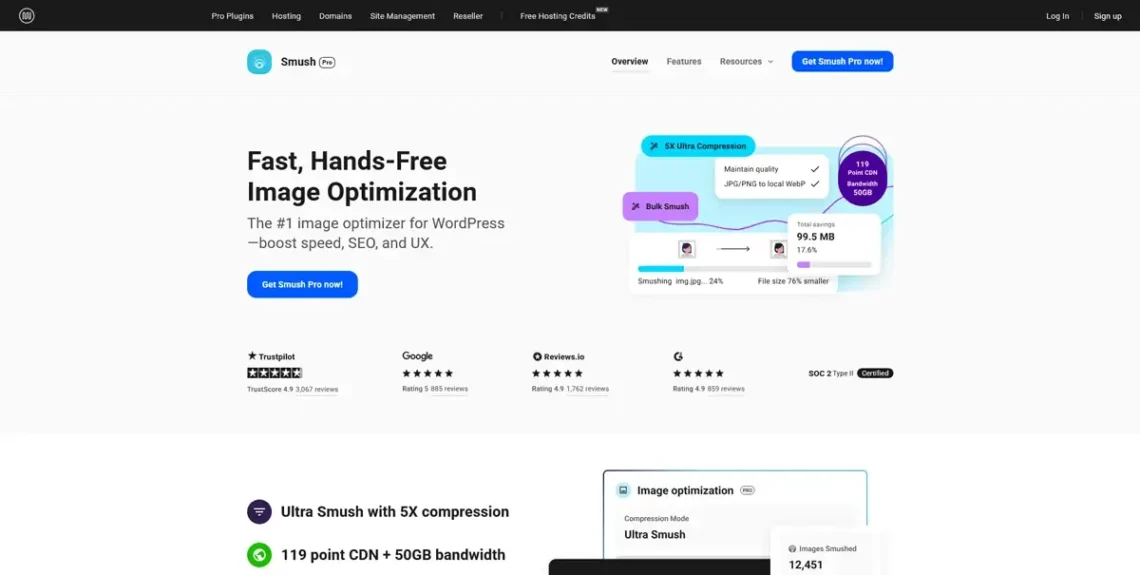
The Smush Image Optimization plugin is one of the best choices when it comes to image optimization.
It can detect which images are slowing down your website and strip them of unnecessary metadata. This reduces the image file size, so visuals load faster.
Working with all popular image formats, Smush can optimize up to 50 files with one click and even works with pictures that are not present in your media library. Most importantly – it does it without any loss of quality.
Smush has racked up over 1 million active installations and has won Torque’s Plugin Madness 2018 competition, a sure testament to its effectiveness.
Developed by WPMU DEV, Smush offers a Free version. Still, its most advanced features are available only in the Smush Pro package, which, in addition to image optimization, also provides other site management tools. The latter starts at $30 per year for a single website.
3. Akismet Spam Protection

The Akismet Spam Protection plugin comes pre-installed with every new WordPress website. It checks all user comments on your website and prevents the ones that look like spam.
The potentially malicious comments are easy to view and track through the WordPress dashboard, and the plugin also displays the associated URLs so website administrators can spot fishy links. Akismet can automatically discard spammy comments, reducing database clutter and improving overall site performance.
To activate the plugin, you need an Akismet account and an API key. For personal blogs and websites, Akismet Spam Protection is free, and commercial packages start at just over $9.95 per month.
4. Jetpack

Jetpack by Automattic promises to help you improve your website in three crucial aspects – security, speed, and Search Engine Optimization. With more than 3 million active installations to date, Jetpack seems to be doing something right.
It’s packed full of extremely useful features, including a downtime monitoring tool that alerts you if your website becomes inaccessible. It can also send notifications when someone tries to brute-force their way into your website.
Jetpack has its own spam filtering capabilities, and premium packages even offer powerful backup utilities. There’s also a free CDN service for better availability and site performance.
Jetpack has a free version with basic features like brute-force protection, downtime monitoring, and basic stats. More advanced tools are priced between $3.50 and $9.95 per month, and you can also get bundles at over $25 per month.
5. UpdraftPlus Backup
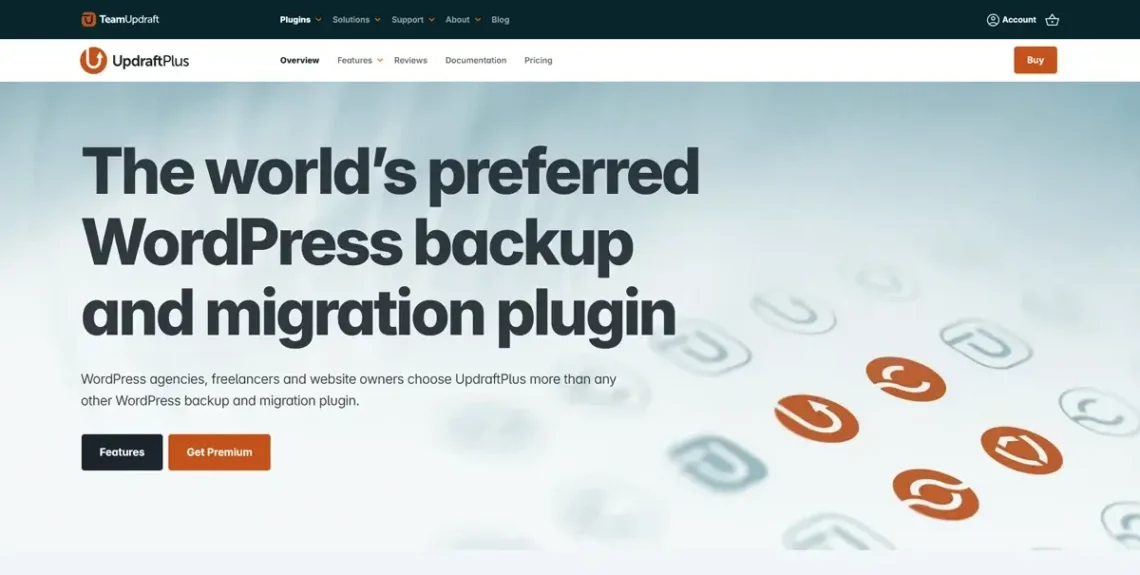
UpdraftPlus Backup advertises itself as “the world’s preferred WordPress backup and migration plugin.” With over 3 million active installations and predominantly positive reviews, this claim doesn’t seem to be that far-fetched.
UpdraftPlus can back up your entire website and send it to a cloud platform or an email address of your choice. Unlike similar plugins, it can also restore the entire site whenever needed.
Thanks to the scheduled backups feature, UpdraftPlus is pretty much a set-and-forget plugin.
The free version can upload backups to popular cloud storage platforms like Dropbox and Google Drive. UpdraftPlus premium plans start at $70 per year and offer a number of additional backup destinations and extra features.
6. WooCommerce

WooCommerce is by far the most popular ecommerce platform for WordPress.
WooCommerce attracts users with several key characteristics. On the one hand, the app is much easier to set up and use compared to other platforms of this type. The fact that you manage your online shop through the all-too-familiar WordPress dashboard plays a significant part in WooCommerce’s popularity as well.
Another WooCommerce advantage comes from the enormous community of developers and users that supports the project. You not only get assistance with technical questions but are guaranteed to enjoy plugins and themes on a regular basis.
Of course, when it comes to ecommerce capabilities, WooCommerce is more than impressive. You can set up a storefront and handle products, pricing, promotions, taxes, shipping, and much more in just a few clicks.
7. OttoKit

Looking to automate some manual day-to-day boring tasks? Here’s a tool that will help you out.
OttoKit is an excellent WordPress automation plugin with a SaaS app that will let you supercharge your website and enhance its functionality. This powerful tool offers a host of features that make it the best choice for optimizing your site and user experience.
The plugin lets you seamlessly connect your WordPress site to various apps and services, expanding its capabilities and connectivity. Additionally, its user-friendly interface and customization options make it a breeze to tailor your page automation to your specific needs. Create dynamic workflows, automate email campaigns, and personalize user experiences, all with ease.
OttoKit ensures real-time data synchronization, error handling, and enhanced security, guaranteeing that your website operates smoothly and securely without needing your presence.
8. BuddyPress
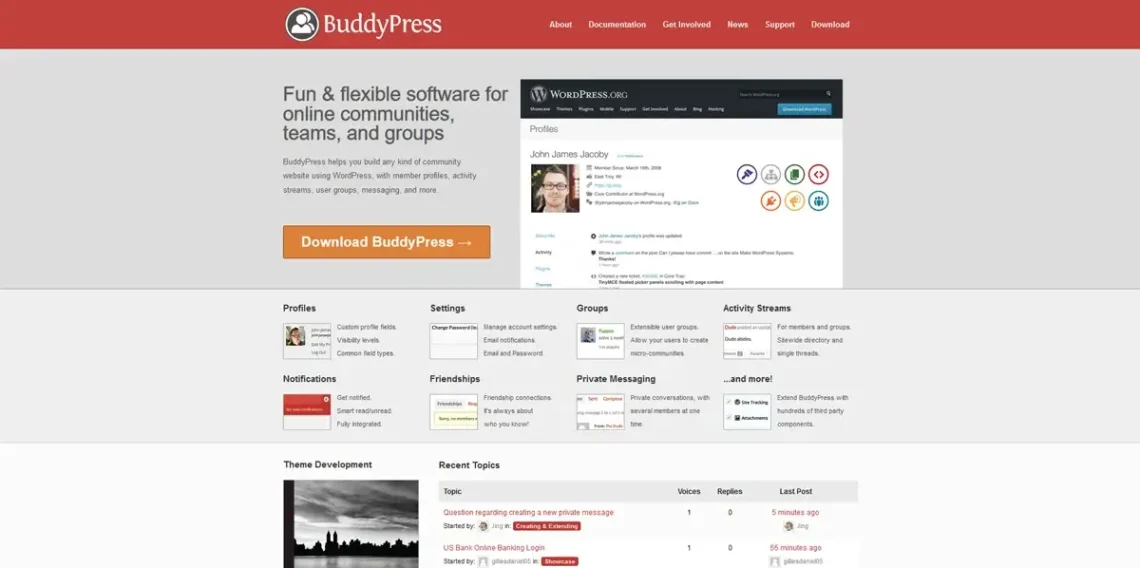
If your goal is to gather an online community of like-minded people, then BuddyPress may be the right WordPress plugin for you. With it, your visitors will be able to interact with your website and each other.
Users will be able to create accounts, upload profile photos, and communicate privately and in groups with other people. Meanwhile, you can track their activity via the WordPress dashboard.
BuddyPress is a 100% free, open-source project, available on the official plugin repository.
9. Classic Editor
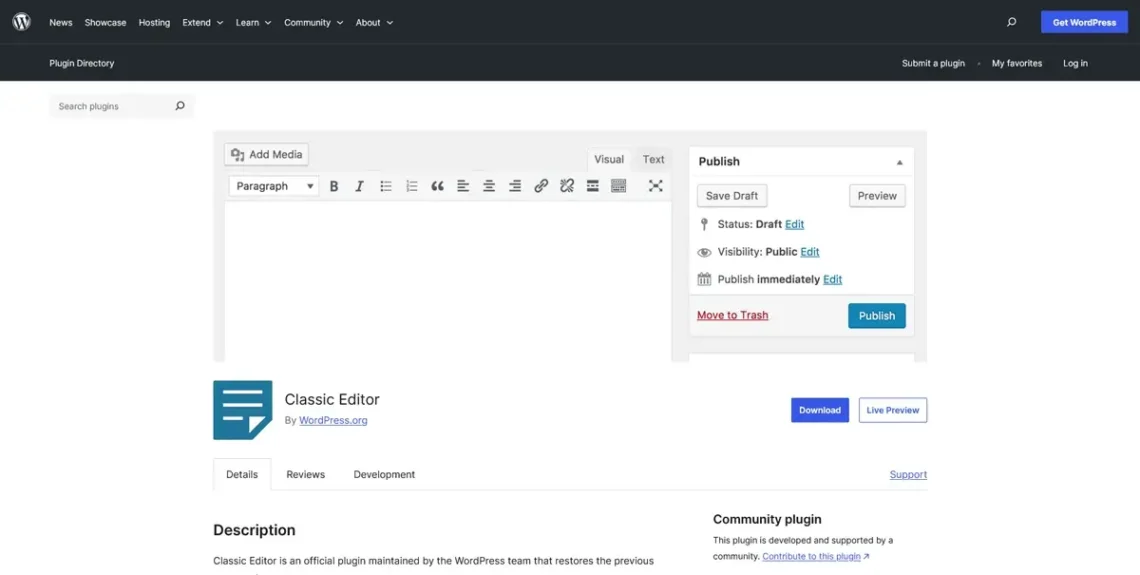
In 2018, WordPress 5.0 arrived with a major update.
A plugin called the Gutenberg Editor (or block editor) was integrated into the WordPress core, becoming the default way of editing posts. It treats every single component, including paragraphs, headings, lists, etc., like a separate block that can be edited with a wide range of tools and menus.
The idea was to give users the chance to make better-looking pages. Some appreciated the new addition, but many were unhappy because they had grown too used to the traditional editor and found it difficult to adjust to the new design.
WordPress’s core development team heard the outcry and released the Classic Editor plugin. It has already amassed over 9 million downloads, which goes to show that many still prefer the classic way of editing content.
Classic Editor is free for use and can be installed with a few mouse clicks.
10. Elementor

The Elementor plugin should be the perfect solution for users looking to easily create and design a website.
Elementor is a website builder for WordPress. It integrates with your WordPress dashboard and presents a drag-and-drop interface for customizing websites.
Using various templates, blocks, and widgets, you can create a professional-looking design even without previous experience. The 10 million active installations and 6,000 five-star user reviews signify that Elementor really does its job tremendously.
Elementor is an open-source plugin, but the free version is somewhat limited in the number of widgets and templates you can access.
The Pro version with more design options starts at around $60 per year.
11. WPForms
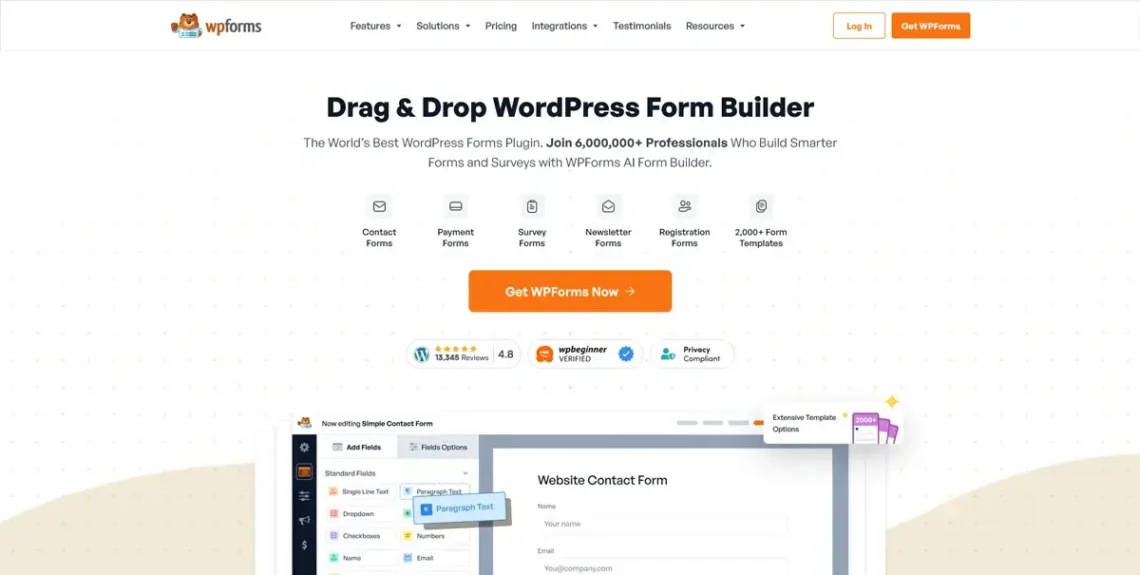
A drag-and-drop interface is also at the core of the next plugin on our list – WPForms. Creating forms that users can interact with is extremely important in this day and age, and WPForms is arguably the easiest way to do so.
Whether you want to create a contact form, get your visitors to sign up for a newsletter, or get signups for a cause, WPForms is there for you. It flaunts a beginner-friendly interface with virtually limitless options.
You can easily rearrange the fields, drop-down menus, and buttons, enable and disable labels, and even apply specific CSS rules to your forms. There’s an integrated anti-spam feature, and you can also use reCAPTCHA in your login forms.
You can install WPForms from your WordPress dashboard. The plugin has more than 6 million active installations and thousands of positive reviews.
The plugin developers also offer a few premium plans that start at around $50/year and come with a number of additional features and templates.
12. WPML
WPML is one of the most popular plugins for multilingual WordPress websites. It offers integration with over 40 languages out of the box, all with easy management and AI translation options.
Automatic translation is available not only for your content but also for URLs and meta descriptions, both of which are very important for your SEO efforts.
WPML is a premium product that doesn’t have a free version. Prices start at just under $40/year for a single site and go up to $200/year for the bells-and-whistles package.
13. Yoast SEO

Yoast SEO for WordPress is one of the most powerful weapons when it comes to getting recognized by search engines.
It can trace its roots back to 2008 and currently has over 10 million installations and tons of positive reviews. It prides itself as the most widely used SEO plugin and one of the most feature-rich ones.
Yoast ensures search engines instantly know what your website is all about.
Keyword and link optimization are available on all plans, and the plugin helps you with suggestions on what you can do to make your content more SEO-friendly.
The Free version is available on WordPress.org and installed directly from your WP backend.
The Paid plans offer numerous additional features and cost under $120 for the first year.
14. Google Analytics Dashboard by MonsterInsights
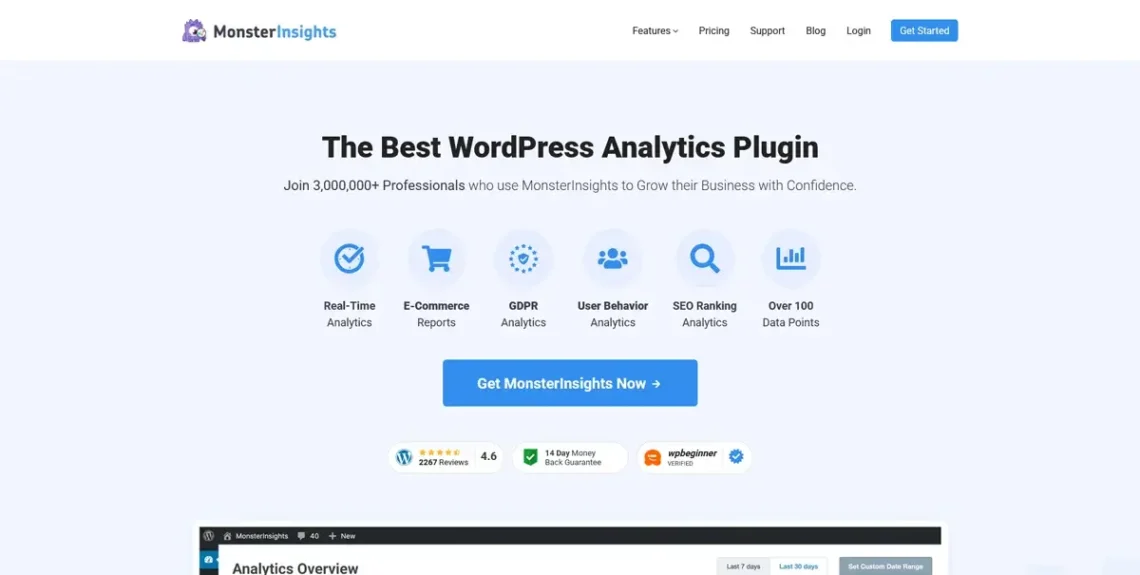
No plugin has been quite as successful in integrating Google Analytics in WordPress as MonsterInsights.
With over 2 million active installations, it’s the most popular add-on of this type. When you check out some of the features included, you’ll quickly see why.
Connecting the plugin to your GA account happens in a couple of clicks, so you can start analyzing your visitor data almost immediately.
MonsterInsights will give you insights into the most visited pages and posts, how much time people spend on your website, and where they come from. Based on all this information, you can optimize your website and take steps that will help it grow further.
The Lite version of the plugin is available for free and can be used by anyone.
After installing it, you can upgrade to MonsterInsights Pro with a 50% discount. After the discount, the prices start at just under $100/year.
15. Broken Link Checker
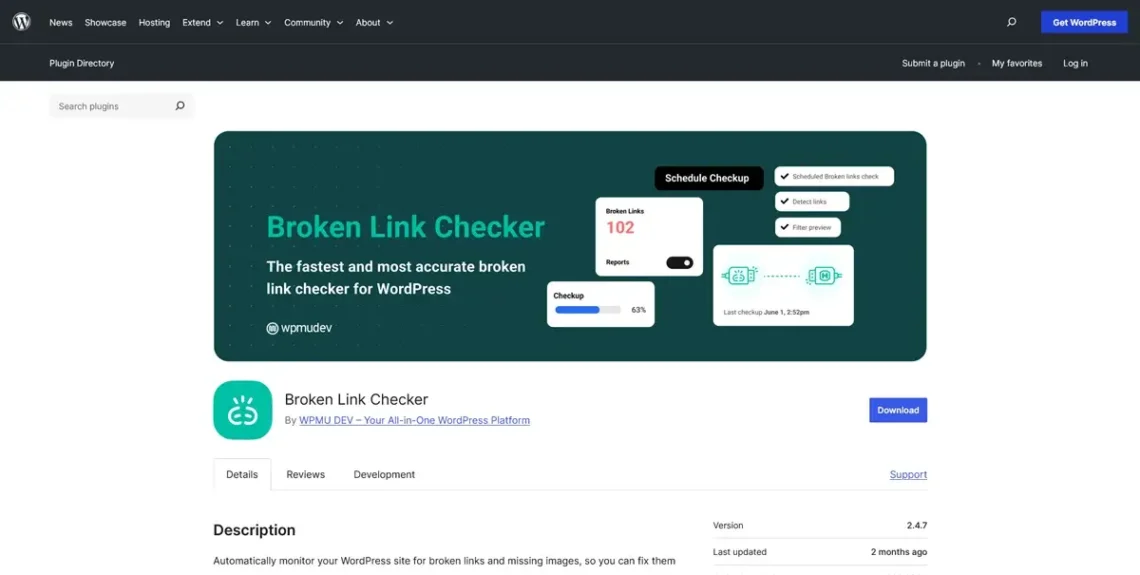
Broken links can be frustrating for both users and search engines as they’re often a sign of an untrustworthy website.
There are quite a few plugins that check and identify these mistakes, but Broken Link Checker by WPMU DEV is undoubtedly one of the most comprehensive ones.
By default, it crawls your website every 72 hours, but you are free to change the frequency if you want to. When it finds an invalid link – it notifies both the administrator and the post author. The plugin can even identify broken links in posts that are scheduled for publishing or saved as drafts.
Broken Link Checker is a completely free WordPress plugin that is currently in use on around 600,000 websites.
Possible Issues with WordPress Plugins
Just because there are many useful WordPress plugins out there doesn’t mean you should install them all. In fact, many professionals will tell you that keeping as few add-ons as possible is your best course of action.
Handling many plugins at once hides numerous risks:
- Higher server resource consumption
- Security issues of old and outdated plugins
- Hacker backdoor possibilities
- Negative impact on website performance
Always make sure to download plugins from trusted sources only. If you have a staging area, it’s a good idea to test add-ons in an isolated environment before rolling them out on your live site.
Don’t forget to regularly check and remove any add-ons you are not currently using. This frees up space, optimizes the database, and makes your site both faster and more secure.
Keep things clean and lightweight, and get the best out of the available WordPress plugins.
ScalaHosting and WordPress
ScalaHosting entered the hosting industry almost two decades ago, and we’ve invested significant time and effort in optimizing our environment for WordPress-based projects.
We are always looking to offer more than the average setup, which is why over the last few years, we’ve been working on SPanel – our proprietary web hosting control panel. SPanel is an all-in-one platform designed to simplify the process of building and launching a website.
Among the many tools you get with SPanel is our WordPress Manager. It’s a unique utility that not only allows you to install WordPress with a couple of clicks but also lets you manage multiple installations, change their admin login details, clone them, create staging environments, and much more. With the Security Lock feature, you can even lock your files, preventing anyone from tampering with them.
Couple this with our managed WordPress and WordPress cloud hosting packages, and you have the perfect environment for deploying and developing your WP project. Contact our sales specialists if you want to learn more.


Conclusion
With thousands of plugins available on the official repository and third-party websites, choosing the best add-ons for your site can be a challenge. However, if you’re fully aware of the functionality you want to implement, all you have to do is know where to look, do some basic research into the available options, and choose the one that suits your needs.
It doesn’t sound like much, but this is essential if you want to make the most of the world’s most widely used CMS.
FAQ
Q: What is a WordPress plugin?
A: Traditionally, WordPress plugins add new functionality to the CMS. They can vary in type and serve different purposes like content caching, website promotion, app security, and more.
WordPress supports nearly 60,000 free and paid plugins, available in the official repository and third-party sites.
Q: How can I sort the good plugins from the bad ones?
A: It’s difficult to classify plugins as good and bad. What works for you might not work for someone else, so make sure to do some research before you jump into installing any add-on. Furthermore, you can check out how many active installations it has at the moment and read some existing user reviews.
At the end of the day, you can always install the plugin in a staging area and see if it creates conflicts with your website.
Q: Is it difficult to install WordPress plugins?
A: Installing a WordPress add-on is actually quite effortless. If you want to install a plugin from https://wordpress.org/plugins/, you can directly do so directly in the WordPress dashboard. If you download the add-on from a third-party website, it will come in the shape of a ZIP archive.
WordPress can then extract the files and install the extension for you within the backend.
Q: Can a plugin break my website?
A: It’s not unheard of for a WordPress plugin to break a website. Not only do they create additional security risks, but sometimes they also lack compatibility with newer WP versions. Some developers don’t put too much effort into maintaining and documenting their plugins properly, which can be very problematic in the long run.
If you see that the plugin you’re thinking of installing hasn’t been updated in a while, it’s best to first test it in a staging environment.