
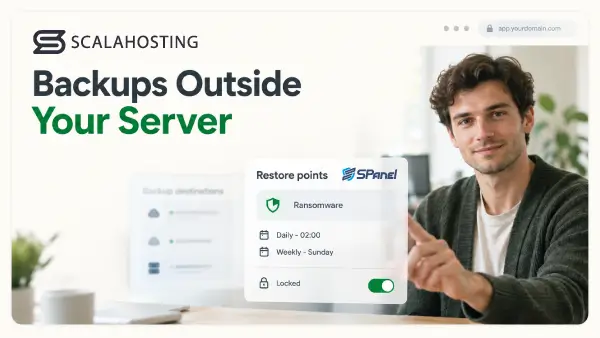
SPanel Backups Explained: Local vs. Remote and the New Rsync Option
You host 40 client websites on one VPS. Every night you run a backup job. Every morning a green checkmark …
You host 40 client websites on one VPS. Every night you run a backup job. Every morning a green checkmark …

A passkey is a cryptographic login credential stored on your device that replaces the password entirely. Instead of typing a …

Tighten SPanel team access in five moves: stop sharing passwords and give each team member their own account, trim each …
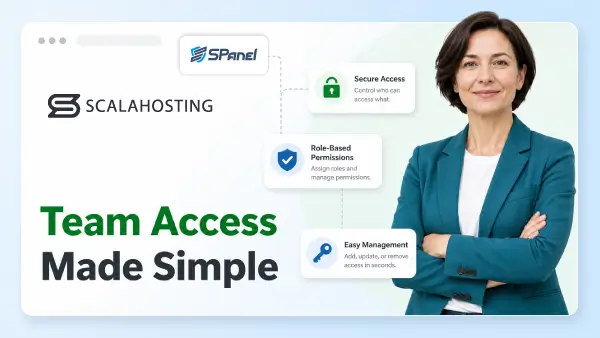
SPanel gives a hosting account two layers of team access. In the Admin Interface you can create multiple admin accounts, …
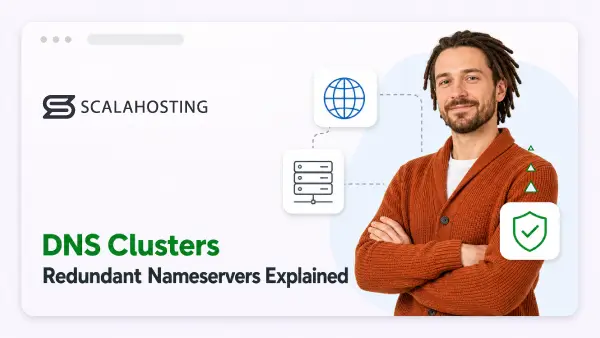
A DNS cluster is a group of separate servers that all answer authoritative DNS for the same domains, so your …

TL;DR Managed cluster hosting keeps a website online when a single server fails by running several servers as one system. …
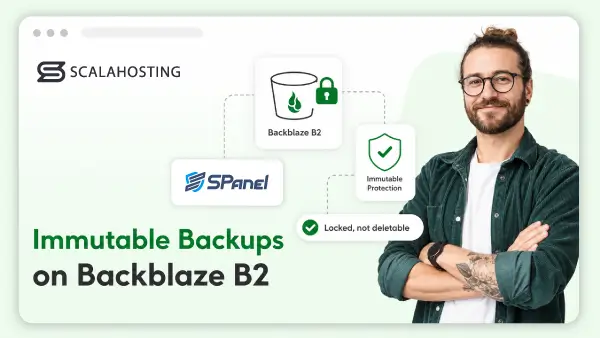
Backblaze B2 Object Lock stores backups on a write-once-read-many (WORM) basis: once SPanel uploads a file into a locked bucket, …

TL;DR An authentication bypass in a hosting control panel lets someone reach an account or admin area without valid credentials, …

TL;DR SPanel auto-optimizes WordPress at install time, then verifies the result. It installs LiteSpeed Cache at a maximum profile, wires …
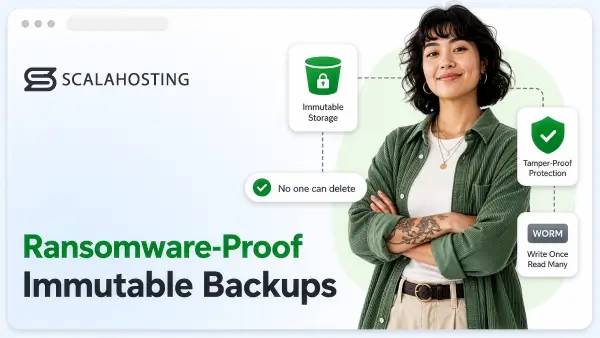
Amazon S3 Object Lock stores backups on a write-once-read-many (WORM) basis: once SPanel uploads a backup into a locked bucket, …

SPanel now offers three added ways to sign in to the control panel: a Google account, a GitHub account, or …

It’s 9 a.m. You scheduled a cron job to back up your database at 3 a.m. Six hours have gone …