What Does Dedicated Server Hosting Mean

TL; DR:
Dedicated server hosting means leasing an entire physical server for your project alone: every CPU core, all RAM and storage. It delivers maximum performance and isolation, typically from around $100/month at mainstream providers, and in 2026 it competes mainly with managed cloud VPS plans with similar isolation from $29.95–$54.95/month.
Web hosting comes in many flavors, each with its own pros and cons. Dedicated server hosting is one of the most expensive choices, but along with the price tag come a good number of benefits…
This includes high performance, better security, and the flexibility to configure it to fit your exact needs. Today we’ll be exploring the ins and outs of dedicated server hosting to give you a better idea of what it is and the advantages that come along with it.
What is Dedicated Hosting?
Dedicated hosting means that you get an entire server all to yourself. In context, it is similar to how most of us use a personal computer. Even when you are not actively making use of it – nobody else can. It will either remain idle or carry out previously assigned tasks.
The main benefits from a dedicated server are:
- Complete control over the environment
- Full utilization of the hardware resources
- Limitless freedom for customizations
In its essence, that’s the last step of your hosting journey, and such solutions are often utilized by big enterprises and very custom projects.
How Does it Compare to Other Types of Hosting?
Although there are many web hosting types on the market, most of them are either app-specific or serve marketing purposes mainly. For example, a Magento hosting plan is typically fine-tuned to operate optimally for the popular ecommerce CMS.
Service-wise, there are only a few core web hosting types. These include Shared hosting, Virtual Private Server (VPS) hosting, Cloud hosting, Reseller Hosting, and Dedicated Server hosting. Each of these come with their own advantages and disadvantages.
Most websites will typically start out with a shared hosting plan, which is the most inexpensive and easy to manage. The service offers reasonable web hosting capabilities at a fraction of the cost of an entire server.
A big part of this is because of the shared hosting infrastructure. Each account gets to occupy a small amount of space on a single server. That’s why a typical shared server can pack a lot of users – all trying to make use of a limited amount of resources such as CPU power and system memory (RAM).
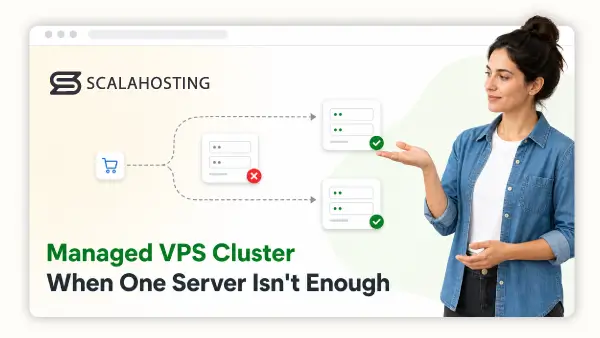
The next step upwards would be VPS hosting. Similar to shared hosting, multiple VPS users can occupy a single server. But here, their accounts are isolated in their own isolated environment and get exclusive use of a certain amount of system resources. In addition, there are significantly fewer VPS clients on one machine.
VPS hosting is comparative in some ways to Cloud hosting. They both share similar characteristics but differ in their scalability. You can scale up VPS accounts to increase the resources available to you, but this is finite. Ultimately, you are limited by the amount of resources that a single server can handle.
Cloud hosting, on the other hand, can combine the resources of multiple servers, allowing for much greater scalability. Still, even Cloud hosting relies on some kind of virtualization technology and is multi-tenanted. This means that, despite the isolated environment, you will be sharing the hardware with other users.
Reseller hosting is a different type of service aimed at anyone who wants to make money off web hosting. Designers, developers, and web agencies often reap great benefits from the service. In essence, you are renting resources from your hosting provider and reselling them as if you are a host yourself. An ideal way for an extra revenue stream.
Advantages of Dedicated Hosting
Compared to the other kinds of web hosting discussed above, dedicated servers come with other exciting core advantages. The service, if configured properly, can be extremely fast, secure, and flexible. There are many scenarios in which an environment such as this can be critically important.
Some of the advantages that dedicated server hosting offer include:
Strong Performance
The key aspect of dedicated servers is its optimized performance. Although cloud packages may potentially offer access to more resources – there is overhead involved. Dedicated servers process everything locally and serve your needs alone.
There is no need for the data to needlessly travel back and forth in complex systems of Storage Area Networks (SANs). System resources are not wasted in maintaining unnecessary elements as well, such as the hypervisor and other things involved in virtualization.
Because of this, dedicated servers often have a strong competitive edge when performance is concerned.
Ultimate Customization
Although VPS and Cloud hosting may offer some flexibility in customization, dedicated servers are far superior in that aspect.
You have complete root access to determine what is deployed on the server and what is allowed to run as well. The control is so granular you can even choose what is allowed in or out of your server from the network.
Increased Data Protection
There is no real substitute for having exclusive access to an entire server. Because of this, some organizations may mandate the use of dedicated hosting, especially where data and website security are mission-critical.
With dedicated solutions, you make use of enterprise-grade data centers where physical access to the server is restricted to only persons authorized by you or your company.
Additionally, you have full control over extra security measures. You can install your own firewall, set custom permission rules, install helpful plugins, and more. If you know what you’re doing, that’s the best way to achieve ultimate data protection.
Exclusive Use of Everything
Despite virtual environments offering dedicated resources, at the end of the day, hosting operations require much more than just a fraction of CPU, RAM, or storage space. By having exclusive use of an entire server, dedicated hosting eliminates the need to compete for resources with other users.
Better Overall Security
Dedicated server hosting eliminates the need for hypervisor technology – the layer which handles virtualization. While essential, that layer itself can present a security risk. The bigger an attack surface you present – the higher the potential for a security breach.
Exclusive use of a server means you won’t have to worry about other users utilizing the same hardware. If you find any potential security breaches, locking down the entire server is a valid option as you’re not interfering with anyone else.
When Should You Opt for a Dedicated Server?
While the advantages of having a dedicated server are apparent, it isn’t a solution suitable for everyone. The first concern that comes to mind is cost, followed by the questions of configuration, deployment, and maintenance of the server.
Because of this, most businesses will require highly competent in-house teams. These are necessary to maintain dedicated servers and help them reach their full performance and security potential.
You should opt for dedicated server hosting if:
- Highly sensitive data is being processed.
- Your site handles large volumes of visitor traffic.
- Multiple websites are being hosted.
- More processing power is needed to run web applications.
- Heavy I/O applications are deployed.
Of course, this also needs to be applied in the context of traffic volume that your site needs to handle. Remember that other types of web hosting can handle even a resource-heavy application, sometimes as efficiently as with a dedicated server.
How Much Does a Dedicated Server Cost in 2026?
A dedicated server costs far more than most sites need – anywhere from about $45/month for а very basic, entry-level hardware to $2,000+/month for enterprise builds. Where you land depends on the hardware tier, whether management is included, and how much bandwidth and support you add on.
| Tier | Typical spec | Price range (monthly) | Example providers |
|---|---|---|---|
| Entry | 4–8 cores, 32–64 GB RAM, NVMe, unmanaged | ~$45–65 | Hetzner (from ~$49), OVHcloud (from ~$64) |
| Mid | 8–16 cores, 64–128 GB RAM, some management | ~$150–400 | OVHcloud, Liquid Web |
| High / enterprise | High core counts, 256 GB+ RAM, fully managed, SLA | ~$700–2,000+ | Liquid Web, OVHcloud enterprise |
Two things inflate the real bill. Most entry prices are for unmanaged servers – you patch the OS, harden security, and handle failures yourself, or pay extra for a managed tier. And the headline rate rarely includes any add-ons (extra IPs, backups, DDoS protection, monitoring) that a production server actually needs.
For comparison, a fully managed cloud VPS covers most of what a small or mid-sized site would reach for a dedicated server to do — at a fraction of the cost. ScalaHosting’s entry managed cloud plan (Build #1) is $29.95 for the first year and $54.95 on renewal, with server management, security, and support included in that price rather than billed as extras.
Dedicated Server vs VPS vs Cloud Hosting
The short version: a dedicated server gives you a whole physical machine, a VPS gives you an isolated slice of one, and cloud hosting spreads you across a cluster of connected servers. Here’s how they line up on the factors that actually drive the decision.
| Factor | Dedicated Server | VPS | Cloud Hosting |
|---|---|---|---|
| Performance | Highest – entire physical machine, no hypervisor overhead | Strong – a reserved slice of one server | Strong and elastic – draws from a cluster |
| Isolation | Complete – the hardware is yours alone | Strong – virtualized, walled off from neighbors | Strong – isolated across the cluster |
| Price | Highest (~$45–2,000+/mo) | Low–mid (from ~$20–30/mo) | Low–mid, scales with use (from ~$30/mo) |
| Scaling | Fixed hardware; upgrading means a migration | Limited to the host machine’s capacity | On-demand, no downtime |
| Who manages it | You (unless you buy a managed tier) | You, or the provider on a managed plan | You, or the provider on a managed plan |
If you want the full background on the middle two options, see our explainers on what is a VPS and how cloud hosting works. For most businesses, the honest answer is that the performance gap between a dedicated server and a well-specced cloud VPS is far smaller than the price gap.
How ScalaHosting Can Help
- Professional Support
With over ten years of experience in the industry, ScalaHosting is one of the business’s well-established names. The company boasts a stunning customer satisfaction rate higher than 99% and is dedicated to offering best-in-class services.
Our support team will do whatever it takes to ensure we are your perfect hosting partner. Our solutions aim to help your business grow towards a future where the sky is merely the first barrier to overcome.
- High Bandwidth and Connectivity
All ScalaHosting dedicated servers are housed in enterprise-grade data center facilities in two key locations – the USA and Europe.
Each of these boasts top-of-the-line carrier-neutral networks.
To get an idea of the capabilities of the network, our Europe data center offers gigabit speeds per server rack. Each server gets dual connectivity, which ensures high levels of redundancy. You are not just getting uninterrupted connectivity, but lightning-fast speeds for your web project alone.
- Stress-free Server Management
ScalaHosting can assist with various aspects of managing your dedicated server. You can start with a free migration if you’re just now moving to the Scala servers from another host. Dedicated hosting plans also come with periodical updates and backup management so you can offer your customers uninterrupted services.
All dedicated servers can also be monitored 24/7 if you opt-in for this extra service.
- Ultimate Security
Both data centers housing ScalaHosting dedicated servers are proven to meet the highest security standards. They are verified with international certifications for quality, performance, and data security. Aside from that, dedicated servers from Scala come with additional security benefits.
Each dedicated server is security-hardened with a combination of firewall, DDoS protection, anti-spam filters, and custom configurations.
- Software Convenience
When selecting your dedicated server, you can choose to have it pre-configured with an Operating System (OS) of your choice. The option to deploy either a Linux or Windows-based server depends on your choice of software and tools for building the web project.
Limitations
Despite all assistance that the ScalaHosting support can provide, dedicated hosting requires a serious commitment. An experienced in-house developer or IT team is often needed to ensure you reap the full benefits of this powerful hosting solution. It is also the only true way you can ensure optimal security that fits your organization’s individual requirements.
When You Don’t Need a Dedicated Server
Most sites that think they need a dedicated server don’t. As a rough rule, if you’re serving under about 50,000 visitors a day, a managed cloud VPS will handle the load comfortably for roughly a third of the price, and without the in-house sysadmin a bare-metal server quietly assumes you have.
A dedicated server is genuinely the right call in a few specific cases: sustained heavy CPU or I/O workloads that run hot around the clock, compliance rules that mandate single-tenant hardware, specialized hardware requirements, or traffic well beyond what virtualization handles gracefully.
If one of those is you, the earlier sections apply, and the cost is justified.
For everyone else, a cloud VPS is the better-engineered choice, not just the cheaper one. You still get dedicated CPU, RAM, and storage and strong isolation plus two things a single dedicated server can’t offer on its own: automatic failover if a node fails, and the ability to scale resources on demand without a migration. And on a managed plan, the provider handles the patching, security, and monitoring you’d otherwise be doing yourself.
That’s why, for the large majority of growing businesses, right-sizing to a managed cloud VPS (from $29.95/mo, renewing at $54.95) delivers what they actually wanted from a dedicated server – reliable performance and isolation without the expense or the maintenance burden.
Conclusion
Dedicated hosting is a powerful, flexible, and secure solution. If you find the hosting you currently use isn’t performing to your expectations, speak to our ScalaHosting experts to better understand what is the best fit for your needs. Dedicated hosting plans can be custom-made to achieve whatever you want.
If your digital operations are a cornerstone of your business, do consider dedicated hosting. Opting for your own server ensures your visitors will get the best possible experience with your website.
Frequently Asked Questions
Q: How does dedicated server hosting work?
A: Dedicated servers are machines offered by hosting companies for your exclusive use. They come with your choice of OS and are configured to your exact specifications where necessary. They make use of the data center facilities that the web host offers, serving a single customer.
Q: Is dedicated hosting worth it?
A: For most small and mid-sized websites, no – a managed cloud VPS delivers dedicated resources and strong isolation for a fraction of the price. Dedicated hosting earns its cost when you have sustained heavy workloads, compliance rules that mandate single-tenant hardware, or traffic well beyond what a VPS handles comfortably, and you have the technical team to run the server. If that’s not you, the budget is usually better spent elsewhere.
Q: What’s the difference between dedicated and VPS hosting?
A: A dedicated server gives you an entire physical machine reserved for you alone, while a VPS gives you a private, isolated slice of a shared physical server. Dedicated hosting offers maximum performance, control, and isolation at a much higher cost; a VPS offers dedicated resources and strong isolation for far less. For most businesses, a VPS, especially a managed cloud VPS, provides more than enough power without the expense or upkeep of bare metal.
Q: Can a cloud VPS replace a dedicated server?
A: In most cases, yes. A cloud VPS provides dedicated CPU, RAM, and storage with strong isolation, plus two things a standalone dedicated server can’t match – automatic failover across a cluster and on-demand scaling. Unless you need a whole physical machine for compliance, specialized hardware, or extreme sustained load, a cloud VPS can handle the same workloads for much less, with server management included if you choose a managed plan.
Q: Who needs dedicated server hosting?
A: Typically, dedicated server hosting is used by popular websites handling a large number of visitors. The service may also help with more resource-intensive operations, such as the running of web applications, especially in a more mission-critical context.
Q: What can I run on a dedicated server?
A: Technically, you can run anything on dedicated servers. In a business context, you may use it for anything from a corporate site to an ERP deployment. On a more personal basis, some users leverage dedicated server hosting to operate game servers, app servers, and more.
What is a VPS – Everything you need to know!